
Choosing a stair runner is one of the easiest ways to give a staircase a more finished and characterful appearance while also creating a practical walking surface. However, before selecting a colour, material, or pattern, accurate staircase measurements are essential. Whether you are considering Stair Carpet Runners London, wool stair runners london, patterned stair runners london, or herringbone stair runners, knowing the exact dimensions of your staircase helps you understand how much runner material is required and how the finished installation should look. A small measuring error can affect the amount of carpet needed, the positioning of the runner, and the overall appearance of the staircase.
For homeowners planning a staircase renovation, measuring is also an important part of deciding which runner style will work best. Straight staircases are relatively simple to measure, while staircases with landings, turns, winders, unusual treads, or different riser heights require more careful attention. Aarohana Homes can help homeowners approach the selection process with a focus on measurements, proportions, materials, and design. From traditional wool runners to patterned and herringbone styles, understanding your staircase dimensions before ordering a runner can make the process more organised and help you communicate accurately with a carpet or flooring professional.
Why Accurate Staircase Measurement Matters
A stair runner is installed across multiple individual steps, so even a small difference in measurement can become significant when repeated across an entire staircase. Each tread and riser contributes to the total length of carpet required. If the runner is too short, there may not be enough material to complete the staircase properly. If too much material is ordered, you may end up with unnecessary waste or additional cost. Accurate measurements therefore provide an essential starting point for planning the project.
Measurement also matters because the width of the runner affects how much of the stair remains visible on either side. A narrower runner creates a more open appearance, while a wider runner provides greater carpet coverage. The ideal width depends on the staircase itself, the surrounding flooring, the style of the property, and the desired visual balance. For homeowners exploring Stair Carpet Runners London, these details can help create a more considered result rather than selecting a runner based solely on its appearance in a sample.
What You Need Before Measuring Your Stairs
Measuring a staircase does not necessarily require specialised equipment, but accuracy is important. A good-quality tape measure is essential, and having a notebook or phone nearby can make it easier to record each dimension. If your staircase has unusual steps, a second person can also make the process easier because one person can hold the tape while the other records the measurements.
Before starting, inspect the entire staircase from the bottom to the top. Look for changes in tread depth, riser height, landings, winders, curves, or areas where the staircase meets a hallway or upper-floor landing. Do not assume that every step is identical simply because the staircase looks uniform. Older properties in London can sometimes have variations in construction, so checking individual measurements can prevent surprises later.
Step 1: Measure the Stair Tread
The tread is the horizontal part of the stair where your foot rests. To measure it, measure from the front edge of the tread back towards the riser. This measurement tells you how much runner is required to cover the horizontal portion of each step.
Make sure you measure the usable carpet area rather than simply estimating from one point. If the staircase has a nosing that projects beyond the riser, take the structure of the step into account. The installation method can influence exactly how the runner is positioned around the nosing, so accurate measurements should be provided to your installer when discussing the final specification.
If your staircase contains different tread depths, record each variation. This is especially important for older or architecturally unusual homes where the stairs may not be perfectly uniform.
Step 2: Measure the Riser Height
The riser is the vertical section between one tread and the next. Measure from the top of one tread to the next tread above it. This gives you the height that the runner needs to travel vertically between steps.
The tread depth and riser height together create the basic measurement for one stair. If the runner is intended to cover both the tread and riser, both dimensions need to be included when calculating the approximate amount of carpet required.
For example, if your stair has a consistent tread and riser measurement, you can calculate the approximate carpet requirement by adding those two measurements together and multiplying by the number of steps. However, this is only a basic estimate. Additional material may be needed depending on the installation method, finishing, pattern matching, and the shape of the staircase.
Step 3: Count Every Step
Once you have measured the tread and riser, count the number of steps from the starting point to the upper landing. It is useful to count the stairs twice to confirm the number because an incorrect step count can significantly affect your material estimate.
Do not automatically exclude the first or final step without checking how the runner will be installed. The lower edge may require a specific finishing method, while the upper end may continue onto a landing or terminate near another floor surface.
Write down the total number of treads and risers clearly. If there is a landing in the middle of the staircase, record it separately rather than treating the entire staircase as one continuous straight run.
Step 4: Measure Any Landing Areas
A staircase with a landing requires additional measurements. If the runner continues across a landing, measure the length and width of the area that will be covered. The installation approach will determine whether the runner changes direction, connects with another section, or uses a separate piece.
Landing measurements are particularly important in London properties where staircases may include compact turns or intermediate floors. A staircase can look straightforward from below but require additional material once the landing is taken into account.
If the landing includes a doorway, radiator, architectural feature, or change in flooring, note these details. They can influence where the runner begins, ends, or changes direction.
Step 5: Measure Winder and Turning Stairs Carefully
Winder stairs are steps that become narrower or change direction around a turn. These are more difficult to measure than standard straight stairs because the tread dimensions can vary from one side to the other.
When measuring a winder, record the dimensions at the area where the runner is expected to sit. The centre line of the staircase is particularly important because the runner needs to follow a consistent path through the turn.
Do not use the measurement from one ordinary rectangular step as a substitute for a winder. If your staircase has several turning steps, professional measurement is often worthwhile because the installation requires greater precision. This is especially relevant when choosing patterned stair runners London, where pattern alignment may be more noticeable around a turn.
Understanding Runner Width
The width of a stair runner is one of the most visible design decisions. A runner usually covers the central portion of each stair while leaving exposed flooring along the sides. The amount of visible stair depends on the runner width and the total width of the staircase.
Before choosing a width, measure the total stair width from one side to the other. Then consider how much exposed flooring you want on each side. A symmetrical installation generally looks more intentional, although architectural features can sometimes require adjustments.
The runner should be proportionate to the staircase. A very narrow runner can look visually small on a wide staircase, while a very wide runner may leave limited visible flooring at the sides. The design of the home also matters. Traditional interiors may suit a different proportion from contemporary spaces.
How Much Carpet Do You Need for a Stair Runner?
The simplest estimate is to calculate the combined length of each tread and riser and multiply that measurement by the number of stairs. However, this should only be treated as an initial estimate rather than the final ordering quantity.
Extra material may be required for installation, trimming, finishing, pattern matching, transitions, landings, and wastage. Patterned runners may require additional material to maintain visual continuity. Herringbone designs can also require careful planning because the direction and positioning of the pattern can affect the finished appearance.
This is why homeowners should avoid ordering carpet based only on a quick calculation. A professional carpet installer can account for the construction of the staircase and the particular characteristics of the runner being selected.
Choosing Stair Carpet Runners London
When exploring Stair Carpet Runners London, homeowners have access to a wide variety of colours, textures, patterns, and materials. The right option depends on the style of the home, the amount of staircase traffic, maintenance expectations, and the overall interior design.
A staircase is one of the most frequently used areas in many homes, so durability should be considered alongside appearance. A runner should not only complement the interior but also be suitable for regular foot traffic.
The surrounding floor is another important factor. Hardwood, stone, tiles, painted stairs, and existing carpets can all create different visual relationships with a runner. Before making a final selection, consider how the runner will interact with the flooring at both the bottom and top of the staircase.
Why Consider Wool Stair Runners London?
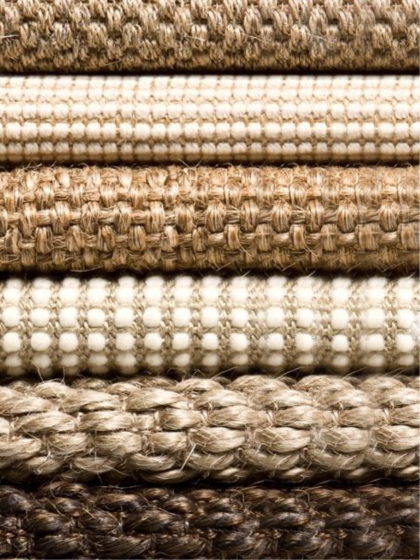
Wool has long been associated with stair carpeting because of its natural texture and suitability for interior applications. Wool stair runners london can provide a warm, tactile appearance that works particularly well in traditional and transitional interiors.
When considering a wool runner, look at the construction, pile, density, and care requirements rather than assuming every wool carpet performs in exactly the same way. The quality and construction of a carpet influence its appearance, resilience, and maintenance needs.
Wool can also work well in homes where homeowners want a more natural material within the interior. For a staircase that forms a strong visual feature, a wool runner can provide texture without relying entirely on bold colours or complex patterns.
Choosing Patterned Stair Runners London
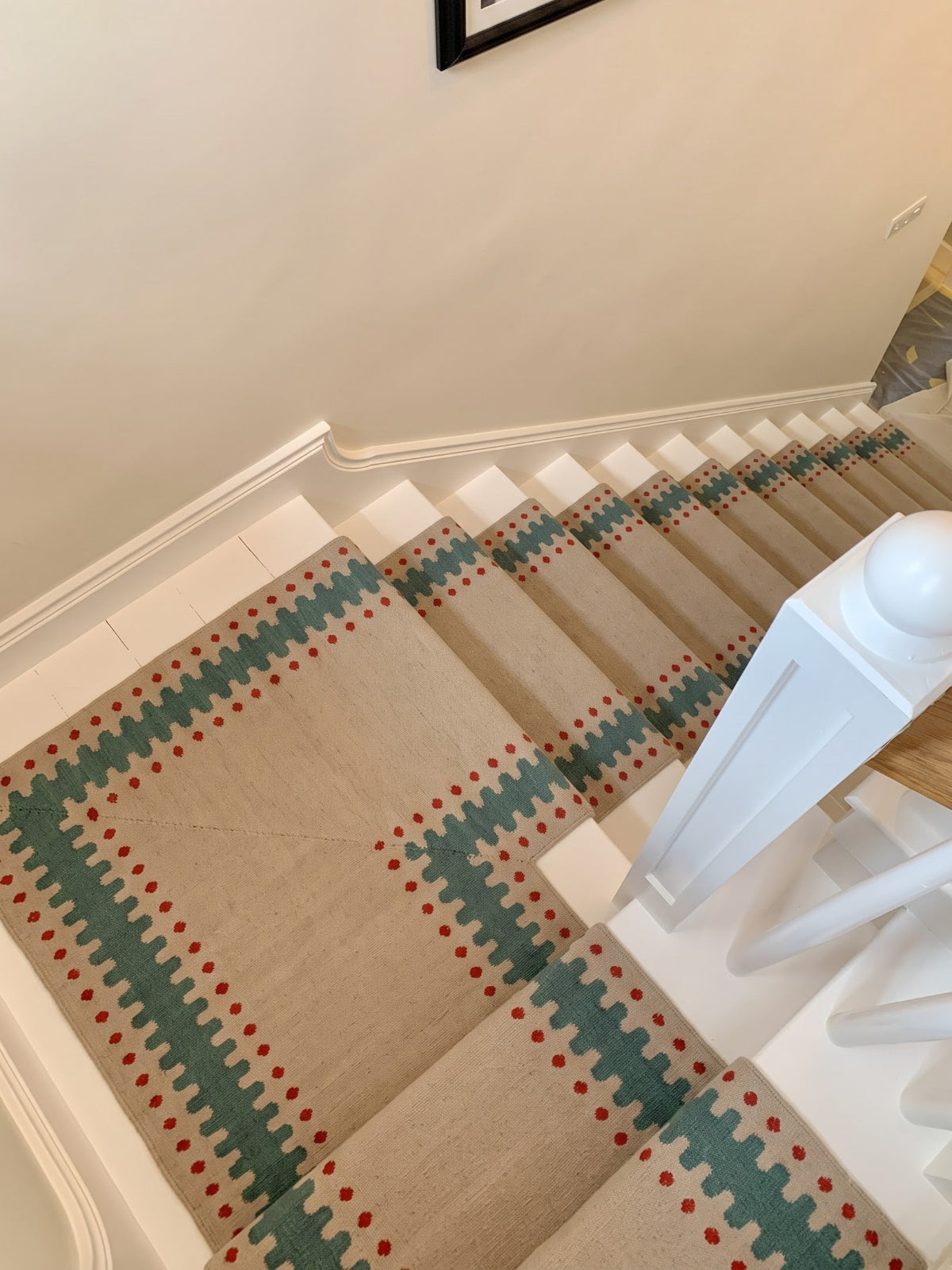
Pattern can completely change the visual character of a staircase. Patterned stair runners London are available in geometric, traditional, botanical, striped, and other decorative designs. They can help make a staircase feel more distinctive while connecting the stairway with other elements of an interior scheme.
However, pattern selection should be considered alongside staircase shape. A pattern that looks excellent on a flat sample may appear different once it travels over repeated treads and risers. The scale of the design also matters. Very small patterns can create a different visual rhythm from large geometric motifs.
Pattern direction is another important consideration. Some designs are intended to run along the length of the staircase, while others have a directional motif that requires careful positioning. Ask the installer how the pattern will be aligned before ordering the runner.
Herringbone Stair Runners: A Timeless Design Choice
Herringbone stair runners have become a popular option for homeowners who want a classic pattern with a structured appearance. The distinctive V-shaped arrangement can add texture and visual movement while remaining relatively versatile across different interior styles.
When measuring for herringbone stair runners, accurate dimensions become especially important because pattern alignment can affect the finished result. The installer needs to consider how the pattern will appear across the treads, risers, turns, and any landing areas.
Herringbone can work particularly well in interiors that combine traditional architectural features with contemporary furnishings. Its geometric structure creates interest without necessarily dominating the entire staircase. However, the scale and colour of the pattern should still be selected according to the size and character of the space.

How to Measure a Straight Staircase
A straight staircase is generally the simplest type to measure. Start by recording the tread depth and riser height, then count the total number of stairs. Measure the overall width of the staircase and determine the intended runner width.
If every tread and riser is identical, an approximate length calculation can be made by adding the tread depth and riser height and multiplying the result by the number of stairs. Add an allowance for installation and finishing based on professional advice.
Even with a straight staircase, however, do not overlook the top and bottom termination points. The runner needs to begin and end neatly, and the exact finishing approach can affect the amount of material required.
How to Measure a Staircase With a Landing
For a staircase with a landing, divide the project into separate sections. Measure the first flight, the landing, and the second flight individually. Record the direction of travel and note any changes in width.
If the runner is expected to continue through the landing, the carpet professional can determine the most suitable way to join or turn the material. The amount of additional carpet required depends on the size and shape of the landing and the installation design.
Taking photographs of the staircase from different angles can also help when discussing the project with a flooring professional. Photos do not replace measurements, but they provide useful visual context.
Measuring Before Selecting Your Runner Design
It can be tempting to select a runner based purely on colour or pattern and think about measurements later. A better approach is to understand the staircase first. Knowing its width, length, shape, and construction gives you a clearer idea of what types of runners are likely to work.
For example, a narrow staircase may benefit visually from a carefully proportioned runner, while a wider staircase provides more room for a substantial border or decorative pattern. A staircase with winders may require a design that handles directional changes effectively.
By measuring first, homeowners can make more informed decisions about materials and designs rather than discovering installation limitations after purchasing the carpet.
Professional Measurement and Installation
DIY measurement can provide a useful starting point, but professional measurement is recommended for a final carpet order, particularly for complex staircases. An experienced installer can identify details that may be difficult for a homeowner to account for, including nosing dimensions, irregular steps, turns, pattern matching, joins, and finishing requirements.
Professional installation also contributes to the appearance and longevity of the runner. The carpet needs to be positioned consistently from one step to the next, with appropriate tension and secure fixing. A well-measured runner can still look uneven if installation is not carried out correctly.
For homeowners considering Stair Carpet Runners London, discussing measurements with an experienced flooring professional before ordering can help reduce material errors and ensure that the chosen runner is suitable for the staircase.
How Aarohana Homes Can Help With Your Stair Runner Selection
Aarohana Homes understands that staircase design involves more than simply choosing a carpet colour. The dimensions, proportions, material, pattern, installation method, and surrounding interior all contribute to the final appearance. Whether you are considering wool stair runners london, patterned stair runners london, or herringbone stair runners, taking the time to understand your staircase can help you make a more informed choice.
The selection process should begin with the practical requirements of the staircase and then move into design. Consider how much traffic the stairs receive, how frequently the runner will need cleaning, the visual style of the property, and how the runner will work with the flooring around it. Aarohana Homes can be considered as part of this design journey for homeowners looking to create a cohesive and thoughtfully planned staircase interior.
Final Measurement Checklist
Before ordering a stair runner, review all of your measurements and make sure you have recorded the complete staircase. Check the number of treads, riser heights, tread depths, overall staircase width, runner width, landings, and any turning or winder steps.
Also consider the runner material and pattern. Wool, patterned designs, and herringbone styles can have different installation and pattern-matching requirements. If the staircase is unusual or includes multiple turns, professional measurement is particularly valuable.
A final check should include the starting and finishing points of the runner. Knowing exactly where the carpet will begin and end helps ensure that the correct amount of material is ordered and that the final installation has a clean appearance.
Final Thoughts
Measuring your staircase correctly is one of the most important steps when planning a stair runner in London. Start by measuring each tread and riser, count every step, check the overall staircase width, and separately measure landings and turning sections. These measurements provide the foundation for calculating the approximate carpet requirement and selecting a runner that is appropriately proportioned for the staircase.
Whether you are exploring Stair Carpet Runners London, wool stair runners london, patterned stair runners london, or herringbone stair runners, remember that appearance and practicality should be considered together. A beautiful runner needs to suit the staircase's dimensions, traffic level, interior style, and installation requirements. With careful planning and professional measurement where necessary, homeowners can create a staircase that feels comfortable, cohesive, and visually considered. Aarohana Homes can support this process by helping homeowners approach stair runner selection with attention to both design and practical details.
FAQs
1. How do I measure my staircase for a stair runner?
Measure the depth of each tread, the height of each riser, and the total number of stairs. Then measure the overall staircase width and decide how wide you want the runner to be. For staircases with landings, winders, or unusual dimensions, measure each section separately and consider professional measurement before ordering.
2. How much extra carpet should I allow for a stair runner?
The required allowance depends on the staircase shape, installation method, pattern, landings, joins, and finishing requirements. A basic tread-and-riser calculation provides only an estimate. A professional installer can calculate the final quantity and account for pattern matching and installation requirements.
3. Are wool stair runners suitable for staircases?
Wool runners are commonly used in residential interiors and can provide a warm, textured appearance. Their suitability depends on the specific carpet construction, staircase traffic, maintenance expectations, and installation requirements. Always check the product specifications before making a final selection.
4. Are patterned stair runners difficult to install?
Patterned stair runners can require more careful planning than plain runners because pattern alignment needs to be considered across treads, risers, turns, and landings. Professional installation can help ensure that the pattern follows the staircase consistently and achieves the intended visual effect.
5. What makes herringbone stair runners different?
Herringbone stair runners feature a distinctive V-shaped geometric pattern that adds texture and visual movement to a staircase. Because the pattern has a strong direction, accurate measurement and careful installation are important, particularly on staircases with turns or landings.